Steps to Make Speedy Waterless Nikujaga (Simmered Meat and Potatoes) in a Staub Cocotte
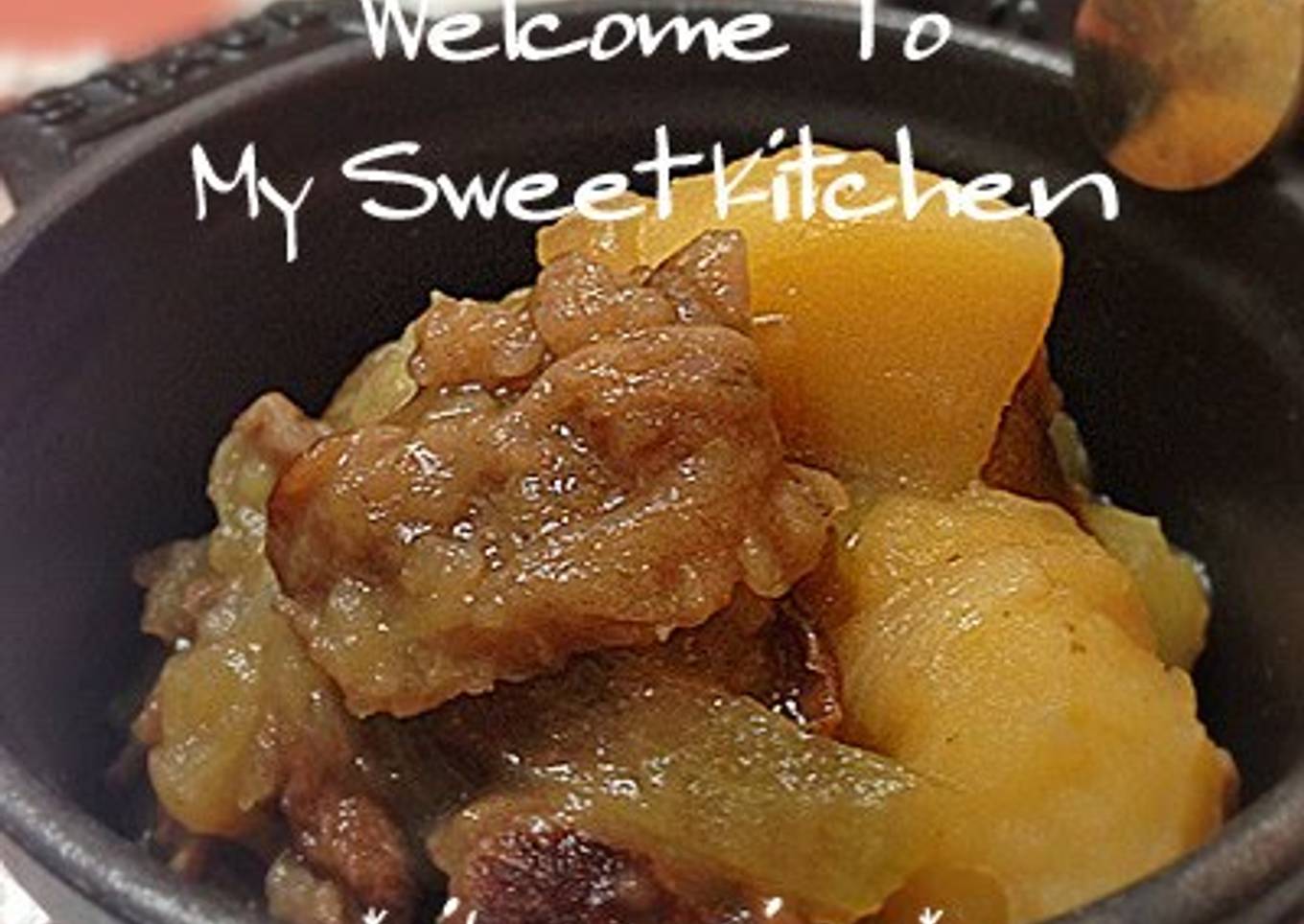
Hey everyone, it's me, Dave, welcome to my recipe site. Today, we're going to prepare a special dish, Step-by-Step Guide to Make Speedy Waterless Nikujaga (Simmered Meat and Potatoes) in a Staub Cocotte. One of my favorites. This time, I will make it a little bit unique. This will be really delicious.
When it comes to cooking, it is crucial to take into account that everybody started somewhere. I do not know of one person who was born with a wooden cooking spoon and ready to go. There's a lot of learning that must be done in order to be a prolific cook and there is definitely room for improvement. Not only would you will need to start with the basics in terms of cooking however you almost must start if learning to cook a brand new cuisine such as Chinese, Thai, or Indian food.
The same holds true for lunches whenever we often add to your can of soup or box of macaroni and cheese or any other similar product as opposed to putting our creative efforts into making a quick and easy yet delicious lunch. You may see many thoughts in this report and the hope is that these thoughts won't just get you off to a wonderful start for ending the lunch rut most of us look for ourselves in at a certain point or another but in addition to test new things on your own.
Another fantastic little bit of information when it comes to cooking basics is to try simpler recipes for some time and expand your horizons into the more complex recipes that abound. Most recipes will have a tiny note in their degree of difficulty and you'll be able to read through the recipe to determine whether it really is something you're interested in preparing or confident that you can prepare. Remember Rome was not built in one day and it'll take a relatively good opportunity to build a reliable'repertoire' of recipes to work into your meal preparation spinning.
Many things affect the quality of taste from Waterless Nikujaga (Simmered Meat and Potatoes) in a Staub Cocotte, starting from the type of ingredients, then the selection of fresh ingredients, the ability to cut dishes to how to make and serve them. Don't worry if you want to prepare Waterless Nikujaga (Simmered Meat and Potatoes) in a Staub Cocotte delicious at home, because if you already know the trick then this dish can be used as an extraordinary special treat.
As for the number of servings that can be served to make Waterless Nikujaga (Simmered Meat and Potatoes) in a Staub Cocotte is 2 servings. So make sure this portion is enough to serve for yourself and your beloved family.
To begin with this particular recipe, we must first prepare a few ingredients. You can cook Waterless Nikujaga (Simmered Meat and Potatoes) in a Staub Cocotte using 10 ingredients and 19 steps. Here is how you cook it.
I was going to make my regular nikujaga, but I experimented and came up with this version of a water-less nikujaga in a Staub cocotte. By thinking about which vegetables have a lot of moisture, I was able to come up with something really satisfying. *To be sure there's enough moisture, refer to the tips in Steps 12-17. The taste and texture will vary depending on many variables. Recipe by *ai*
Ingredients and spices that need to be Make ready to make Waterless Nikujaga (Simmered Meat and Potatoes) in a Staub Cocotte:
- 100 grams "A" Thinly sliced beef (cut into bite-sized pieces)
- 3 "A" Potatoes (cut into 3-4 cm chunks)
- 1 large "A" Onions (thinly sliced into about 1.5 cm slices)
- 1 1/2 tbsp "B" Sugar
- 2 tsp "B" Mirin
- 1 tbsp "B" Sake
- 1 tbsp "B" Soy sauce
- 4 pinch "B" Dashi stock granules
- 1 tsp "C" Soy sauce
- 1 Vegetable oil (or beef fallow)
Steps to make to make Waterless Nikujaga (Simmered Meat and Potatoes) in a Staub Cocotte
- Cut up the "A" ingredients. The size of the potatoes and carrots will affect the cooking time, so be sure to cut as instructed in the ingredients list.

- Heat a little oil (or beef fallow) in a Staub cocotte over medium head. Then, add the thinly sliced beef and cook until brown.

- Once browned, add the onions and potatoes from Step 1 and cook together.

- When the onions and potatoes are thoroughly coated in the oil, add the "B" seasonings and mix well.

- Once the seasonings have evenly coated the ingredients, cover with the lid and simmer for about 30 seconds over medium heat.

- After 30 seconds, reduce the heat to low. Then, set a timer for 10 minutes.
- After 10 minutes, open the lid and add the "C" soy sauce and mix well. Replace the lid and set the timer for 10 minutes.

- After 10 minutes, turn off the heat. Let sit with the lid on for 30 minutes to 1 hour to let it cool, allowing the flavors seep in.

- After at least 30 minutes, mix lightly without crushing the potatoes. *You can do this with a small wooden spoon, if you like.

- And now your super-delicious nikujaga is ready. The potatoes are so nice and fluffy, using only the moisture from the seasonings and vegetables.

- By allowing it to cool first, the flavors will really sink in and become delicious. Heat it up again just before serving.

- [Guideline for the ingredient amounts:] When you put all the ingredients into the cocotte (16 cm diameter), they should fill up about 80-85% of the cocotte, and the amounts of the listed seasoning ingredients should be just right.

- One of our family members dislikes carrots, so we don't add carrots. If you add carrots, replace a portion of the potatoes with the carrots.
- After trying some variations, I found out that if you use less ingredients (for example, about half), then it will turn out like sukiyaki.
- Adjust the amount of ingredients according to the size of your cocotte.
- [Note:] Since this recipe doesn't use any water, the amount of onions is very important for their moisture content.
- Don't reduce the amount of onions in favor of adding more potatoes and/or carrots.
- If you add vegetables with a high moisture content, there will be more liquid, so the outcome of the taste and fluffiness of the potatoes will be different.
- If you use vegetables with a high moisture content, reduce the amount of onions or let the moisture evaporate a bit with the lid open before turning off the heat in Step 8.
It's those small actions that you take towards your goal of cooking healthy foods for the family which may matter far greater than any leap. Before you know it you will realize that you have greater energy and a better sense of general wellbeing than you'd have envisioned before changing up your cooking customs. If that is not enough to encourage you however, you could always check out the excuse to go shopping for new clothes after you lose a size or 2.
So that is going to wrap this up for this special food Simple Way to Make Favorite Waterless Nikujaga (Simmered Meat and Potatoes) in a Staub Cocotte. Thanks so much for your time. I am sure you will make this at home. There is gonna be interesting food in home recipes coming up. Don't forget to save this page in your browser, and share it to your loved ones, colleague and friends. Thanks again for reading. Go on get cooking!
 in
a Staub Cocotte)
Post a Comment for "Steps to Make Speedy Waterless Nikujaga (Simmered Meat and Potatoes) in a Staub Cocotte"